Unveiling the essential river map of Europe provides an indispensable resource for understanding the continents geography and rich history. Americans seeking travel inspiration or educational insights will discover how these ancient waterways shaped nations trade and culture across millennia. From the mighty Danube stretching through multiple countries to the iconic Rhine vital for commerce each river tells a unique story. This detailed exploration highlights key navigational routes ecological significance and popular tourist destinations. Whether planning a future European adventure or simply expanding your geographical knowledge comprehending the intricate network of Europes rivers offers profound appreciation for this diverse land. Understanding a river map of Europe is crucial for students researchers and curious minds alike revealing connections between nature and human development. Discover the flow of history and modern life with a comprehensive river map of Europe.
What are the major rivers shown on a European river map?
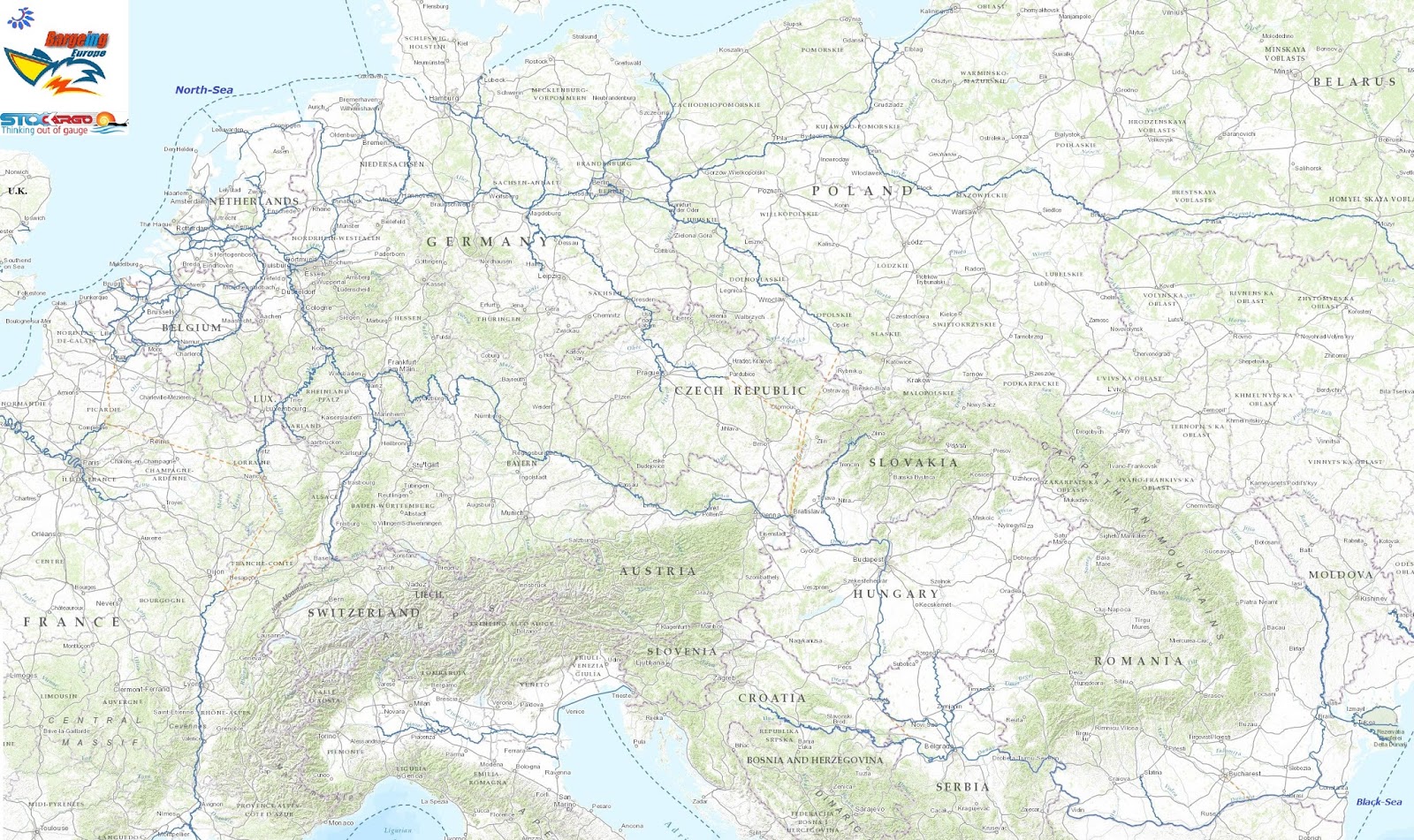
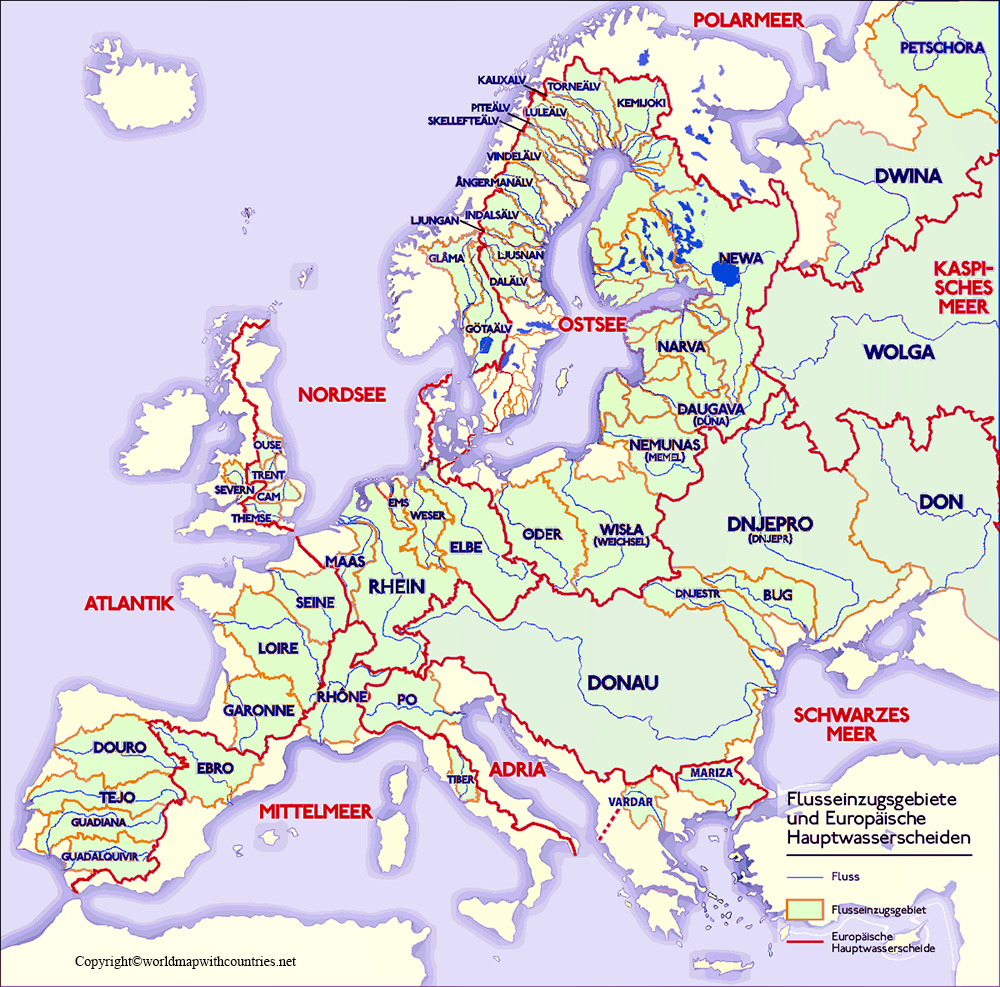
A typical European river map highlights significant waterways such as the Danube, flowing across Eastern and Central Europe; the Rhine, vital for Western European trade; and the Volga, the longest river entirely within Russia. Other prominent rivers include the Seine, Elbe, Oder, Vistula, and Po. These rivers are crucial for navigation, commerce, and tourism, deeply influencing the continent's geography and history. They are essential features on any detailed map.
How many major rivers are there in Europe?
Europe boasts numerous rivers, but roughly 10-15 are considered major due to their length, economic significance, or role in historical development. The most recognized include the Danube, Rhine, Volga, Elbe, Oder, Vistula, Dnieper, Don, Po, Loire, and Seine. These rivers form an extensive network vital for various purposes, from transportation and agriculture to power generation and tourism. Each contributes uniquely to the European landscape.
What is the importance of rivers in Europe?
Rivers in Europe hold immense importance, serving as historical boundaries, trade routes, and sources of sustenance. They facilitated the growth of major cities, enabled cultural exchange, and continue to support diverse ecosystems. Today, they are critical for freight transport, hydroelectric power, irrigation, and the booming river cruise tourism industry. Rivers are truly the lifelines that shaped and continue to sustain European civilization and economy.
Which river connects the Black Sea to the North Sea via canals?
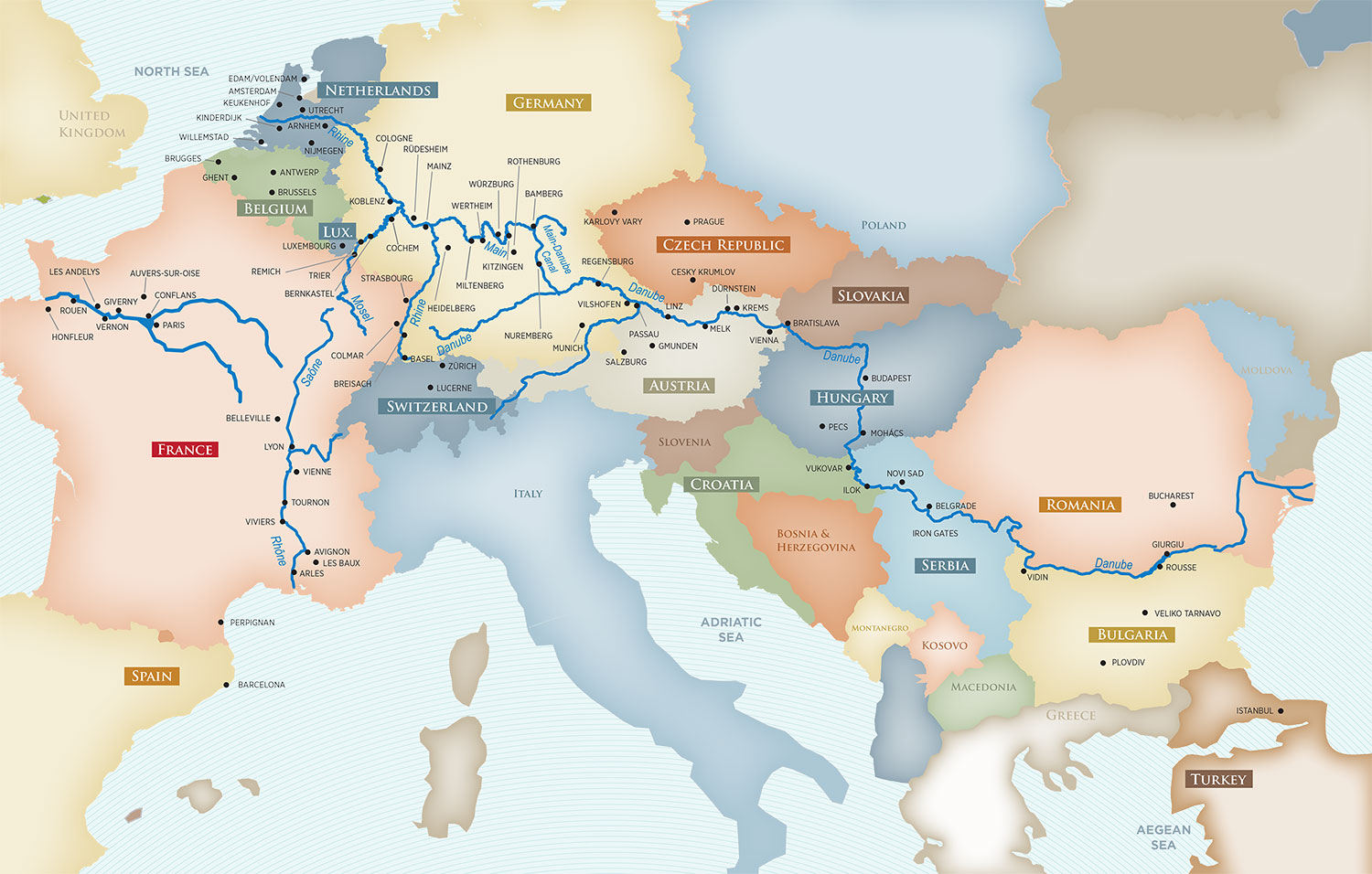
The Danube River, in conjunction with the Rhine-Main-Danube Canal, connects the Black Sea to the North Sea. This impressive canal system provides a navigable link, allowing vessels to travel from the North Sea (via the Rhine and Main rivers) across the European heartland to the Danube, which then flows to the Black Sea. This connection is a monumental feat of engineering, significantly boosting inland European trade and tourism.
Where does the Danube River start and end?
The Danube River originates in the Black Forest mountains of Germany, specifically from the confluence of the Brigach and Breg rivers near Donaueschingen. It then flows southeast for approximately 1,770 miles (2,850 kilometers) through ten countries. The Danube ultimately empties into the Black Sea through a vast and ecologically rich delta located primarily in Romania and Ukraine, marking its grand conclusion.
Do European rivers have historical significance?
Absolutely, European rivers possess profound historical significance. They served as natural defenses, boundaries for empires, and crucial arteries for migration, trade, and military campaigns throughout history. Rivers like the Rhine formed part of the Roman Empire's frontier, while the Danube witnessed countless historical events and cultural exchanges. The very location and growth of many European cities are directly tied to these vital waterways and their historical roles. Their importance cannot be overstated.
A river map of Europe illustrates the vital waterways that crisscross the continent influencing its geography, history, and development for millennia. These rivers, including the Danube, Rhine, and Volga, have served as crucial arteries for trade, transportation, and cultural exchange. They shaped where ancient settlements emerged, facilitated the movement of people and goods, and continue to support diverse ecosystems and economies today. For anyone studying Europe, planning travel, or understanding global trade, a comprehensive river map provides indispensable insight into how the continent functions and connects.
Unlocking Europe's Waterways The River Map of Europe
Exploring a detailed river map of Europe truly reveals the continent's intricate network of natural highways. These ancient routes are far more than just lines on a map for the United States audience. They represent the lifeblood of European civilization, influencing ancient empires and modern trade. Understanding this crucial river map of Europe is essential for grasping the region's geographical significance.
Major European rivers like the Danube river offer unique perspectives on multiple countries and cultures. Imagine navigating its waters, experiencing diverse landscapes and historical cities firsthand. The Rhine river, another key player, provides vital commercial links and breathtaking scenic beauty. A comprehensive river map of Europe helps visualize these journeys and their profound impact. People often search for the most navigable rivers in Europe for travel.
These European waterways are not just for commerce; they are also popular tourist destinations. River cruises are a fantastic way to explore, offering a relaxed pace through stunning scenery. From the romantic Seine in France to the powerful Volga in Russia, each river tells its own story. A detailed river map of Europe can guide your next great adventure. Discover the rich geography of Europe through its mighty rivers.
The Historical and Economic Power of European Rivers
Historically, the river map of Europe shaped political boundaries and fostered the growth of major cities. Settlements often thrived along riverbanks, utilizing water for sustenance, agriculture, and defense. The accessibility provided by these rivers propelled early trade networks. This ancient influence remains visible on any modern river map of Europe today, reflecting deep historical roots.
Economically, Europe's rivers are indispensable for transportation and power generation. Barges move vast quantities of goods, connecting industrial hubs to ports. Hydroelectric dams harness their energy, contributing to sustainable power grids across many nations. The major rivers Europe depend on continue to be crucial for ongoing economic stability. Understanding the flow of these rivers helps understand European commerce.
Key Rivers on the River Map of Europe
| River Name | Major Countries Flowing Through | Approximate Length (miles) | Significance |
| Danube | Germany, Austria, Slovakia, Hungary, Croatia, Serbia, Bulgaria, Romania, Moldova, Ukraine | 1,770 | Second longest European river, crucial for trade and cultural exchange |
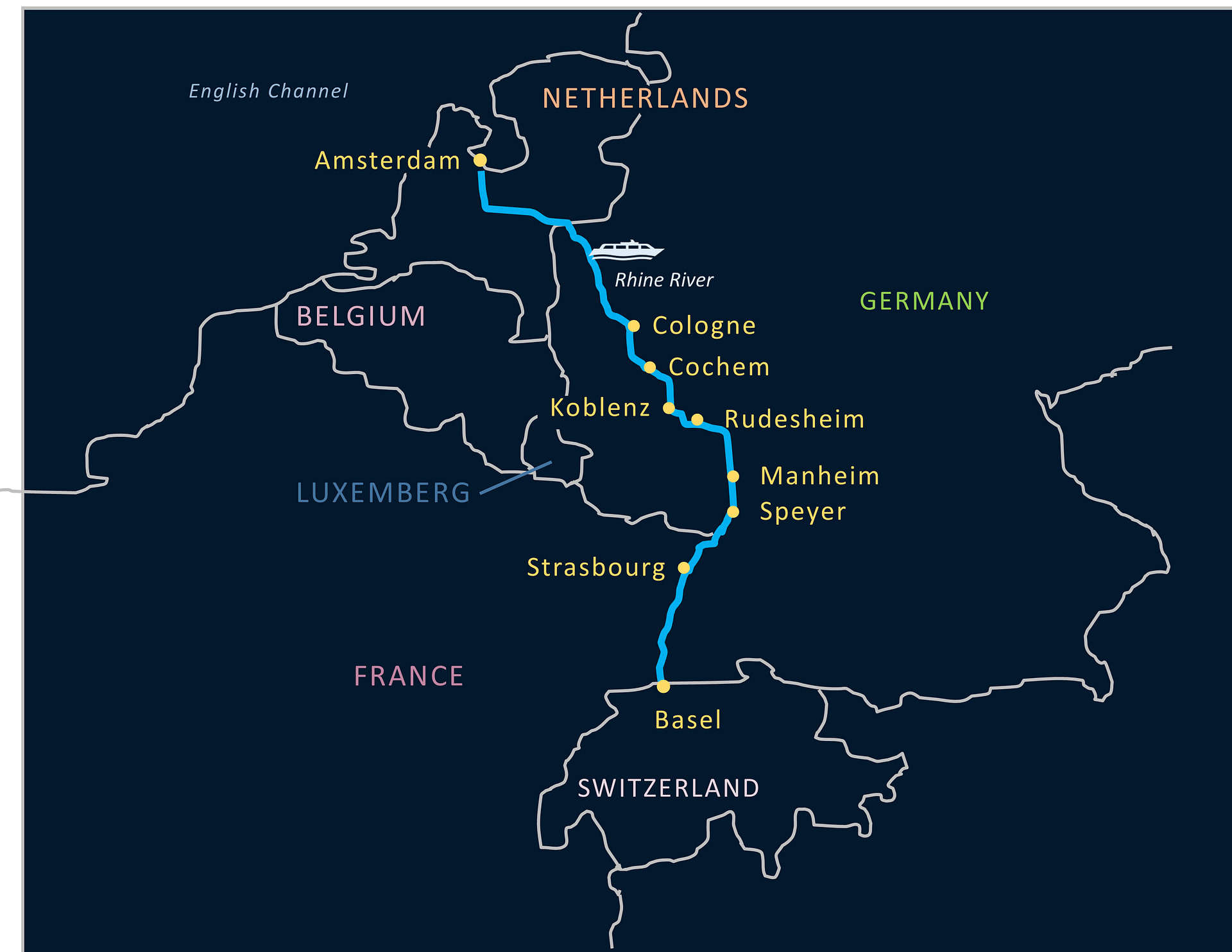
| Rhine | Switzerland, Liechtenstein, Austria, Germany, France, Netherlands | 760 | Major European waterway for commerce and industry |
| Volga | Russia | 2,294 | Longest river in Europe, vital for Russian history and economy |
| Seine | France | 483 | Iconic river flowing through Paris, significant for tourism and culture |
| Elbe | Czech Republic, Germany | 678 | Important for central European trade and transport |
What Others Are Asking? About the River Map of Europe
What are the three most important rivers in Europe?
The Danube, Rhine, and Volga are often considered Europe's most important rivers. The Danube, Europe's second-longest, traverses ten countries, vital for navigation and cultural connections. The Rhine is crucial for industrial transport, linking Western Europe's heartland to the North Sea. The Volga, the longest in Europe, is Russia's primary waterway, fundamental to its history and economy. These three collectively exemplify the profound impact of rivers on European civilization.
Which river flows through the most countries in Europe?
The Danube River flows through the most countries in Europe, passing through ten different nations. Originating in Germany's Black Forest, it journeys southeast through Austria, Slovakia, Hungary, Croatia, Serbia, Bulgaria, Moldova, Ukraine, and Romania before emptying into the Black Sea. This extensive reach highlights its immense importance for trade, culture, and ecology across a significant portion of Central and Eastern Europe.
What is the biggest river on the map of Europe?
The biggest river on the map of Europe by both length and discharge volume is the Volga River. Located entirely within Russia, it stretches approximately 2,294 miles (3,692 kilometers) from its source in the Valdai Hills to the Caspian Sea. The Volga plays a pivotal role in Russian history, culture, and economy, supporting vast ecosystems and major cities along its extensive course. It truly dominates the Eastern European landscape.
What is the longest river in Western Europe?
While the Volga is longest overall, the longest river predominantly within Western Europe is generally considered the Rhine River. Flowing about 760 miles (1,223 kilometers) from the Swiss Alps through Germany and France to the North Sea, it is incredibly vital. It serves as a major shipping route and has been historically crucial for trade, industry, and strategic importance, impacting numerous Western European nations significantly.
Are European rivers navigable?
Yes, many European rivers are highly navigable, forming an extensive network vital for trade, tourism, and transportation. Rivers like the Rhine, Danube, Elbe, and Main are equipped with locks, canals, and well-maintained channels that accommodate barges, cargo ships, and popular river cruise vessels. This navigability facilitates economic activity and offers unique travel experiences, connecting inland regions to major seaports efficiently.
FAQ About the River Map of Europe
What is a river map of Europe?
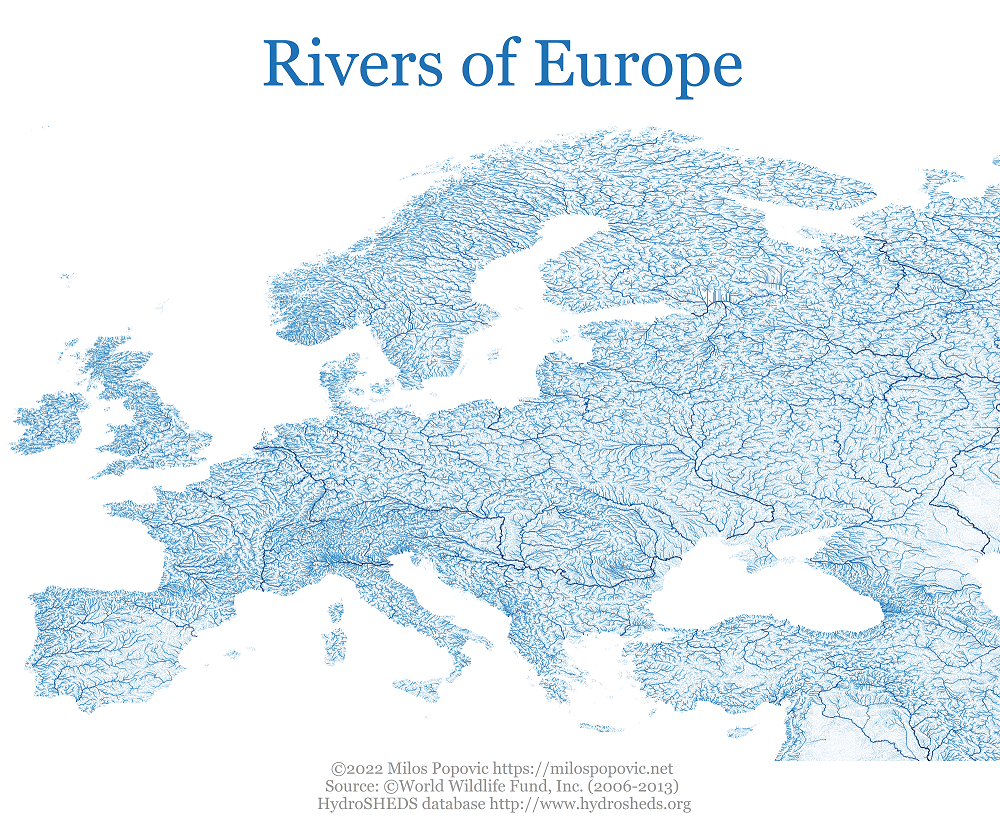
A river map of Europe visually displays the continent's natural waterways. It shows the courses, tributaries, and relative sizes of major rivers. Such a map is essential for understanding European geography, historical development, and current environmental aspects. It helps identify key navigational routes.
Who uses a river map of Europe?
Historians, geographers, environmental scientists, urban planners, and travelers frequently use a river map of Europe. Tour operators rely on it for planning river cruises. Anyone interested in European history, trade, or geography finds these maps invaluable for insight and planning. Students also benefit greatly.
Why is a river map of Europe important?
The importance of a river map of Europe lies in illustrating how rivers shaped the continent. They defined borders, facilitated trade, and influenced cultural exchange. Understanding these waterways provides context for historical events, economic development, and environmental conservation efforts across Europe. Rivers are lifeblood.
How do rivers impact Europe's climate?
Rivers significantly influence Europe's local climates by transporting water and heat. They moderate temperatures in surrounding areas, creating fertile floodplains. Evaporation from rivers contributes to local humidity and precipitation patterns. This hydrological cycle is a key part of the regional climate system. Many support unique microclimates.
Summary of Key Insights on the River Map of Europe
The river map of Europe is a powerful tool for understanding the continent's complex geography and rich history. Key rivers like the Danube, Rhine, and Volga have played pivotal roles in shaping nations, enabling trade, and fostering cultural connections. They remain crucial for modern transportation, economic development, and tourism. Exploring these waterways offers deep insights into Europe's past and present. The detailed river map helps us appreciate the interconnectedness of Europe's natural and human systems.
The river map of Europe showcases major waterways like the Danube Rhine Volga and Seine. These rivers are vital for trade transportation and tourism across the continent. They have historically influenced European cities and political borders. Understanding the river map aids in comprehending the regions geography and ecology. Many European rivers support diverse ecosystems and offer recreational opportunities. The interconnectedness of these rivers highlights Europes integrated natural systems.
35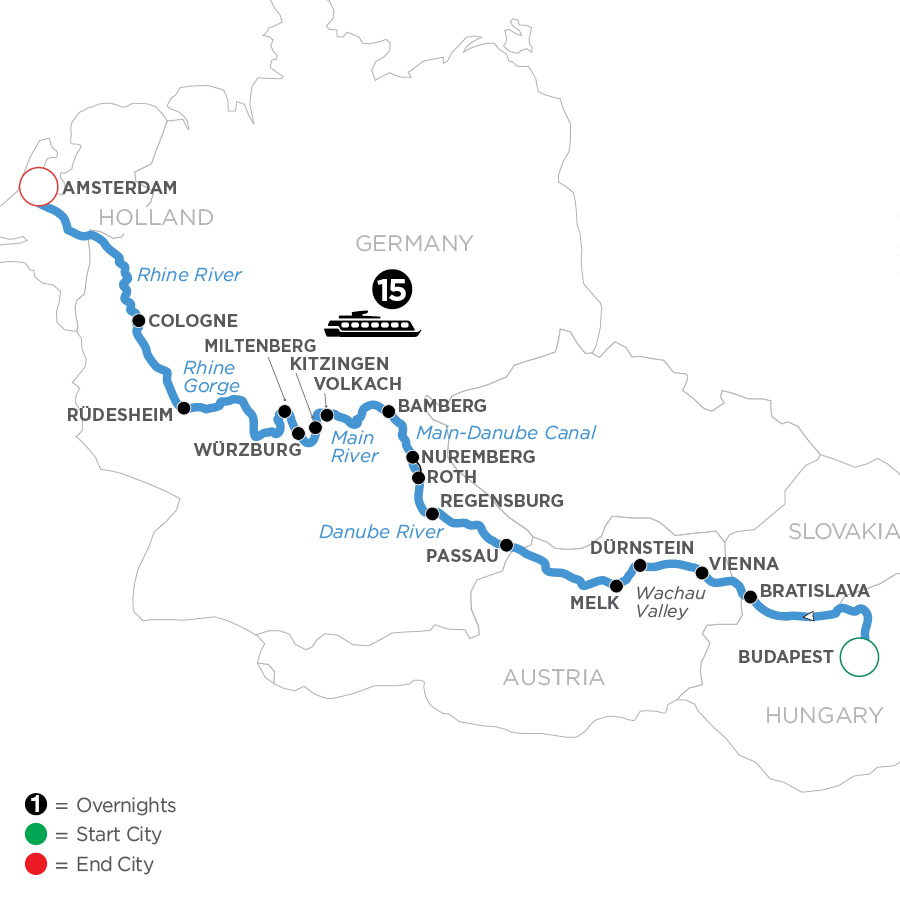
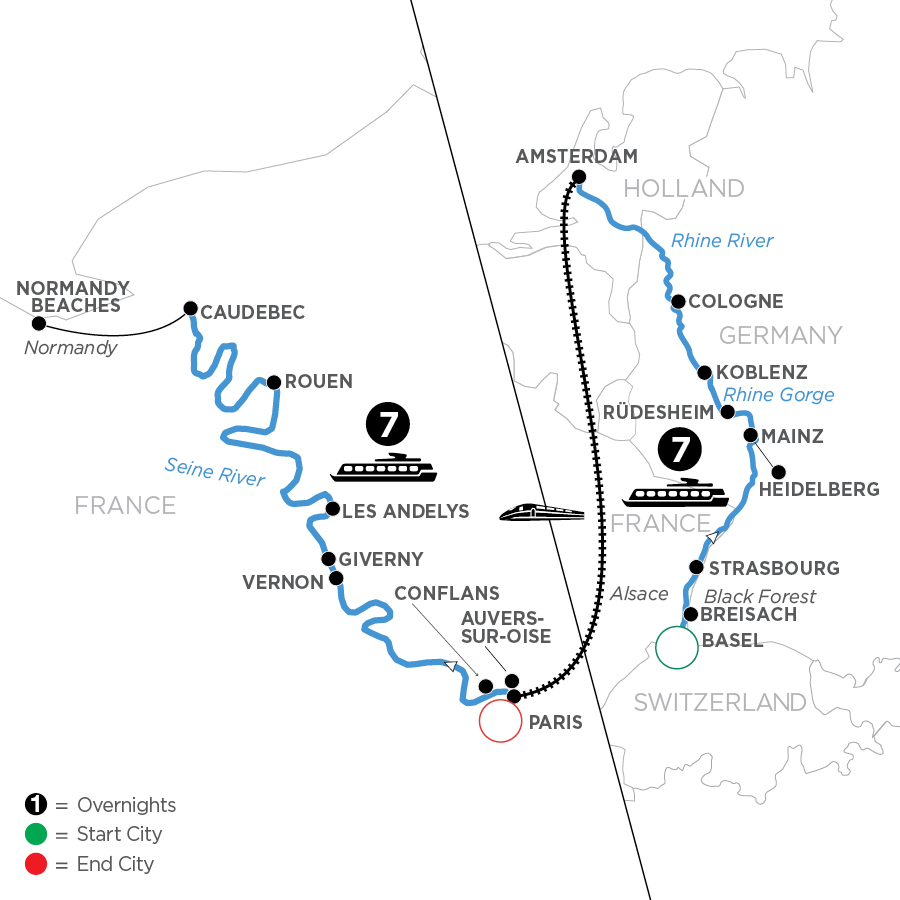
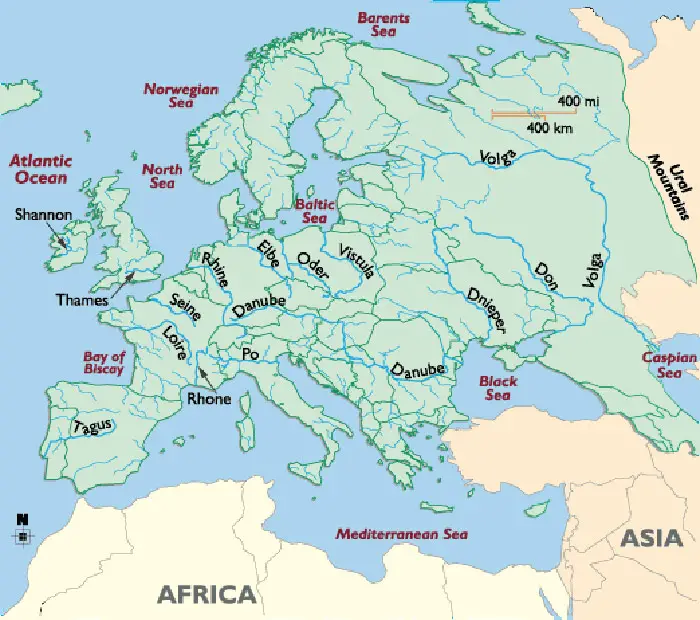
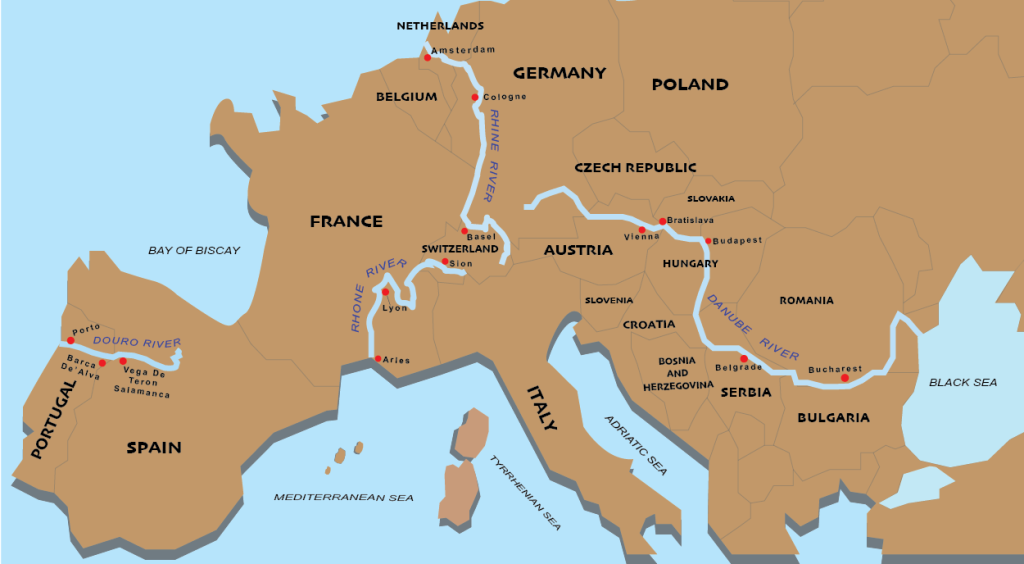
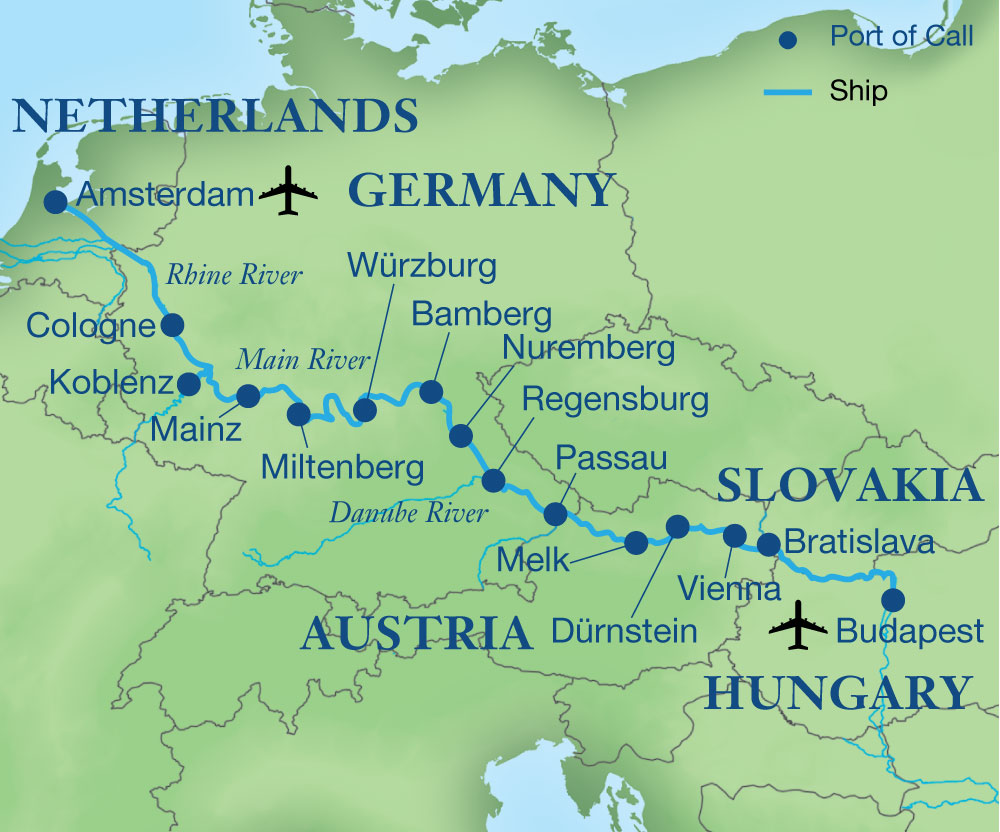
Magnificent Rivers Of Europe 2026 By Globus Tours With 11424 Reviews 200213 . Timeless Rivers Of Europe The Rhine And Seine 2026 By Globus Tours 200182 . Europe Major Rivers Map Mapsof Net Europe Major Rivers Map . European River Cruise Maps Europe River Cruises Viking . Danube River Europe Map Ahi Europes Great Rivers 2025 V2
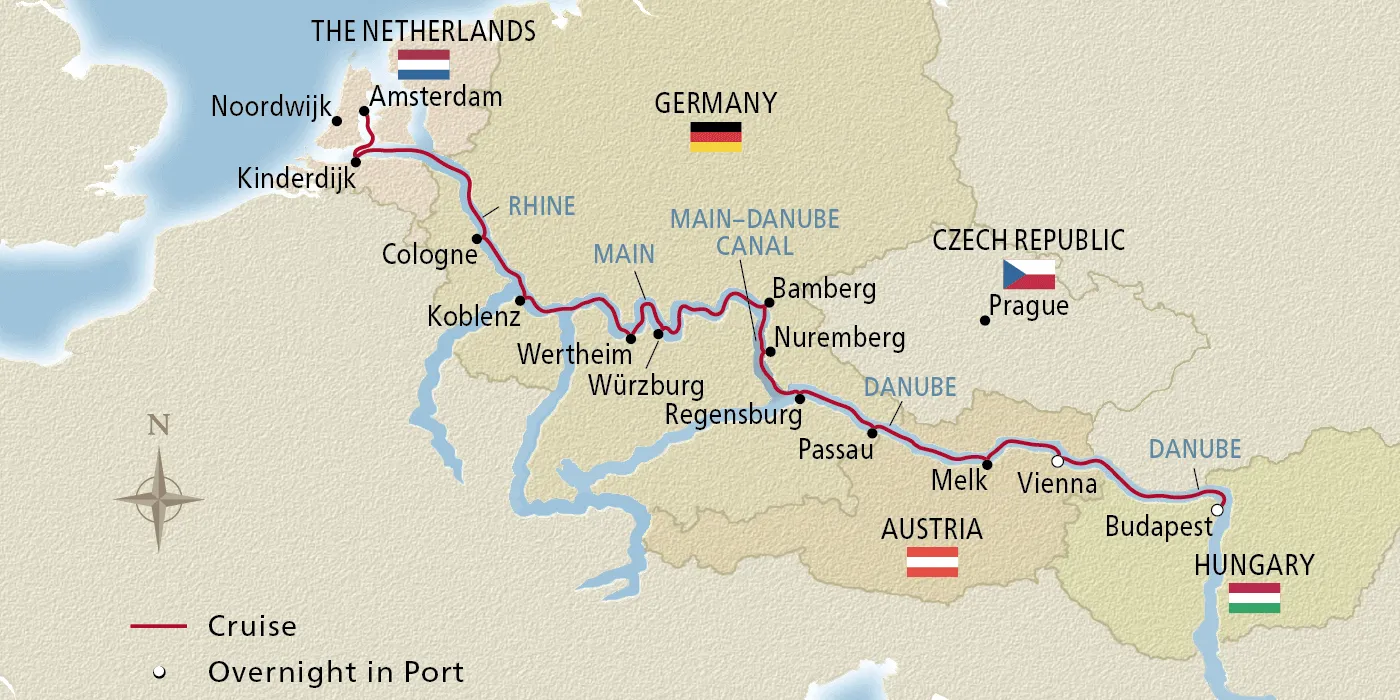
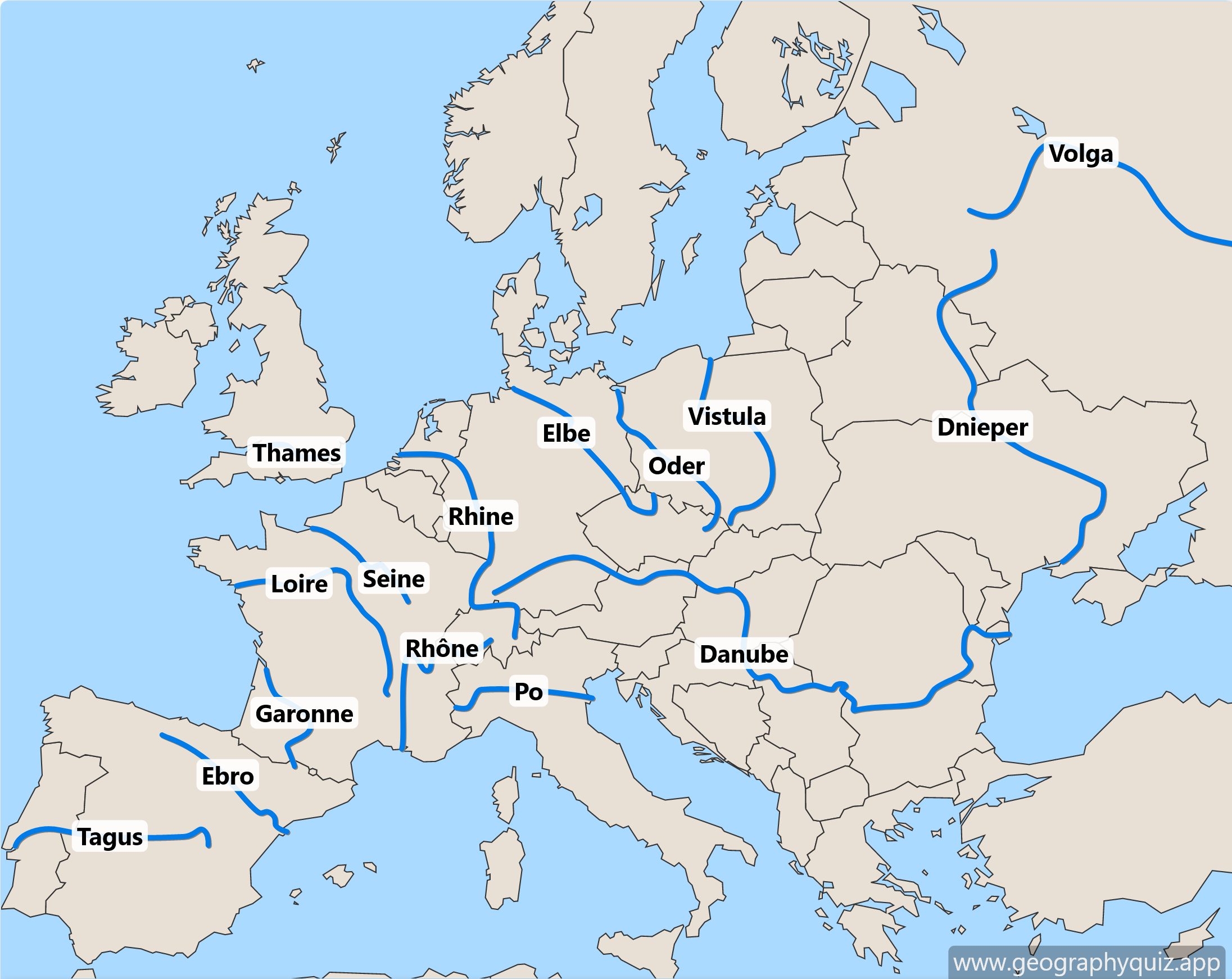

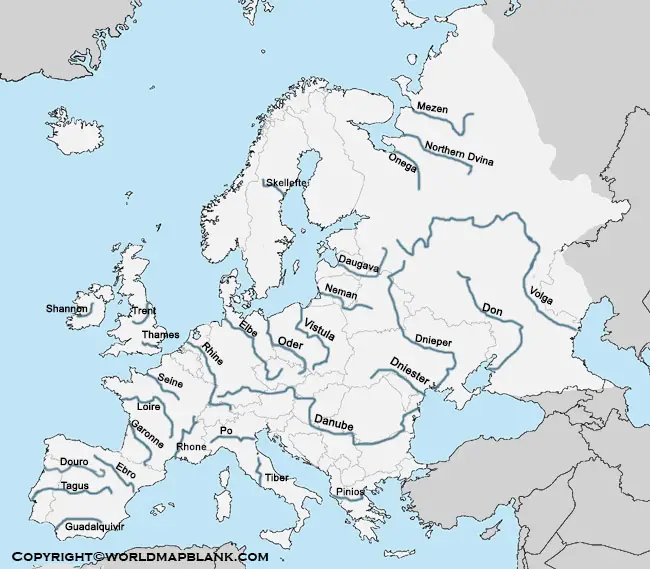
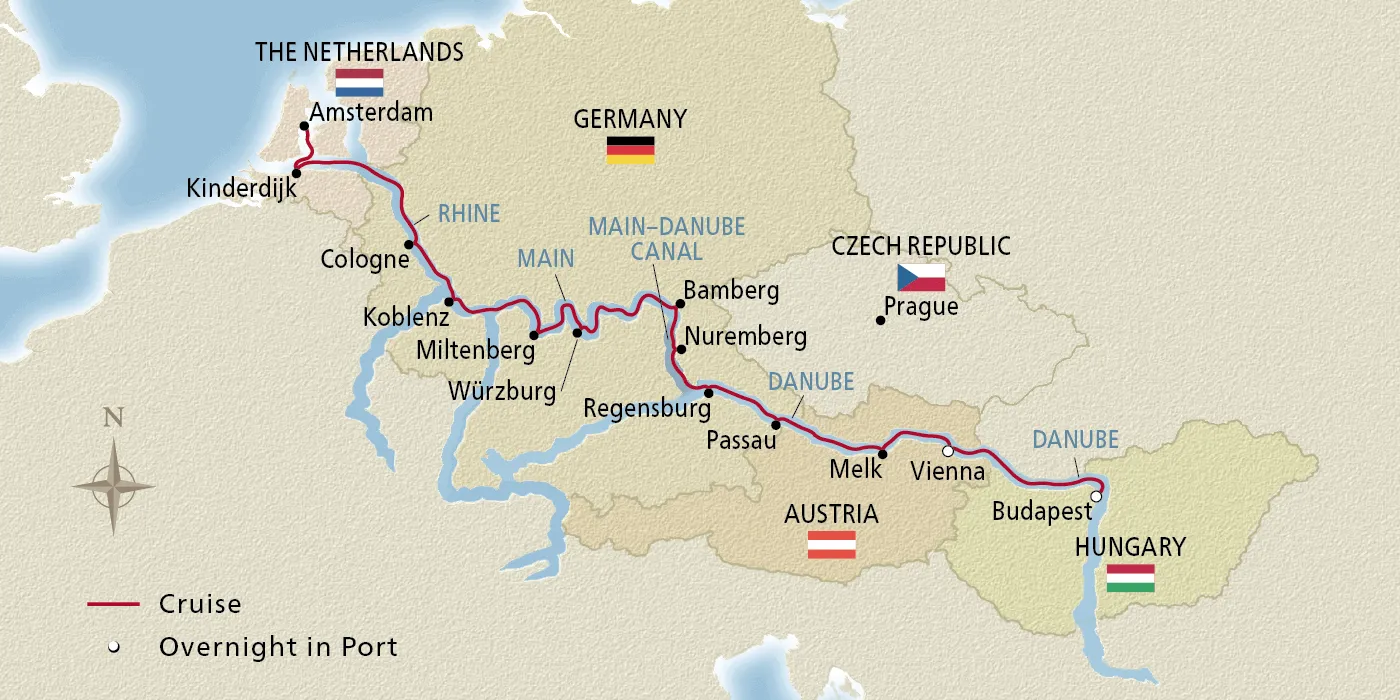
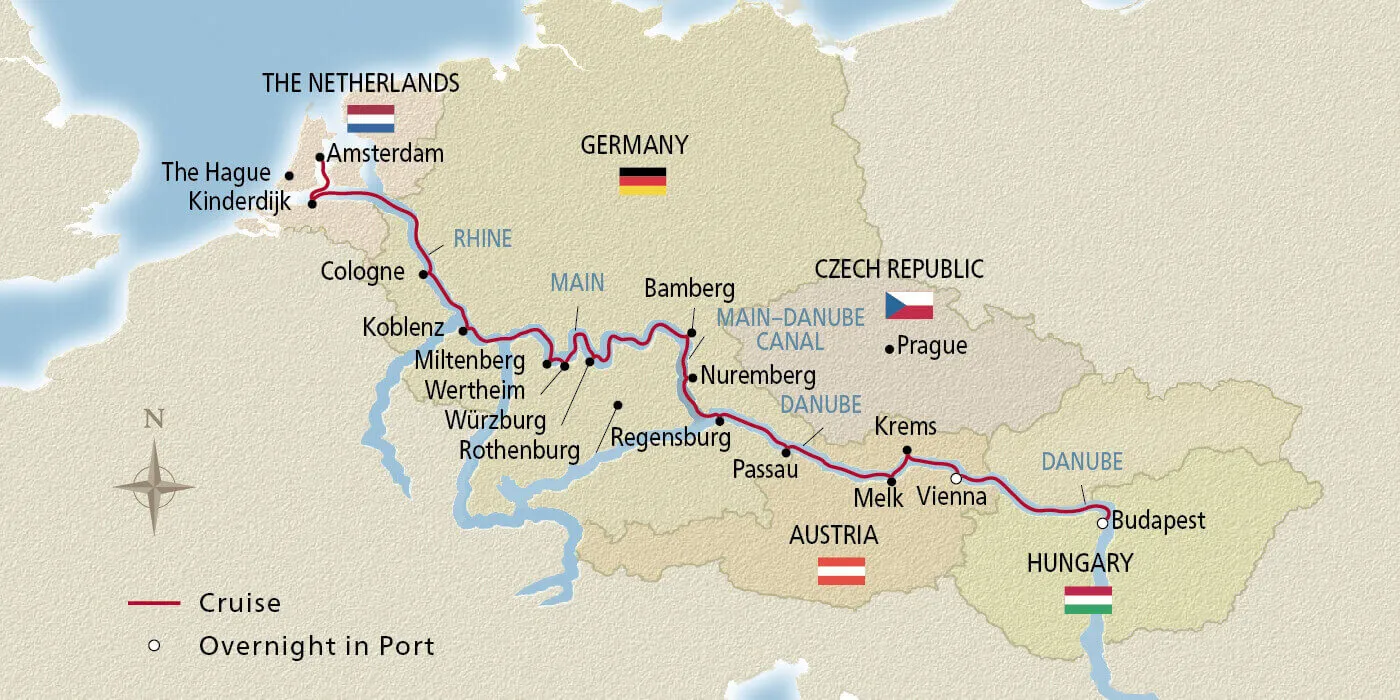
Grand European Tour 2026 Itinerary Budapest To Amsterdam Viking. Edu Perceive VIII Social Science Second Term Notes Malayalam Europe En Rivers . Free Labeled Map Of Europe With Rivers In PDF Map Of Europe Rivers With Countries . Printable Europe Rivers Map Map Of European Rivers PDF World Map EUROPE Rivers Map . Grand European Tour 2026 Itinerary Amsterdam To Budapest Viking


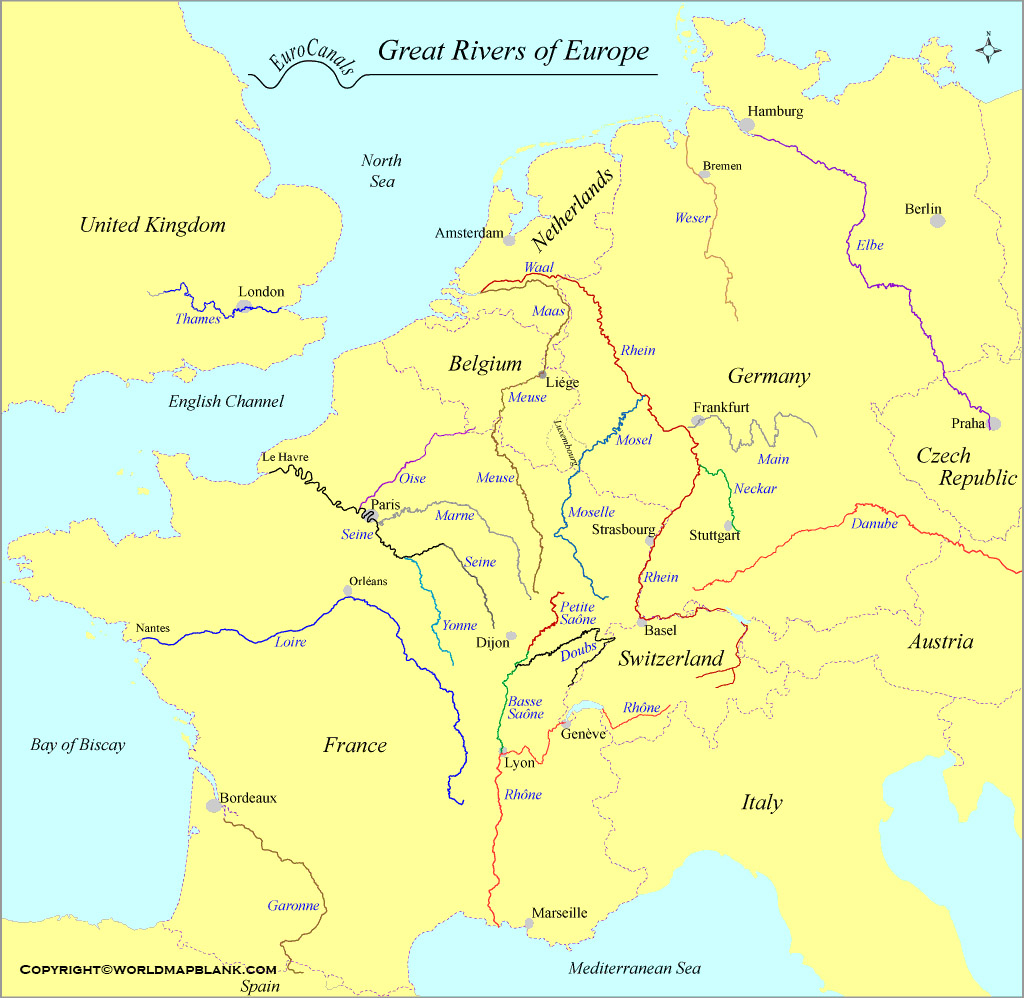

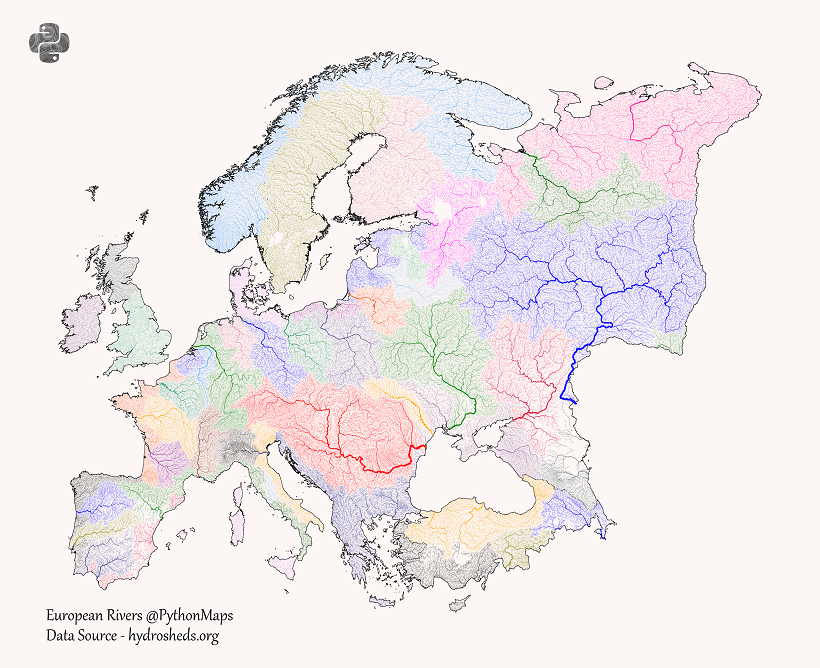
Europe Map Rivers Crawler. Europe Map River Europe . Printable Europe Rivers Map Map Of European Rivers PDF World Map Map Of EUROPE River . European River Cruises 2024 2026 Seasons 105779 . Mapping The World S River Basins By Continent PythonMaps River Basins Europe 820px
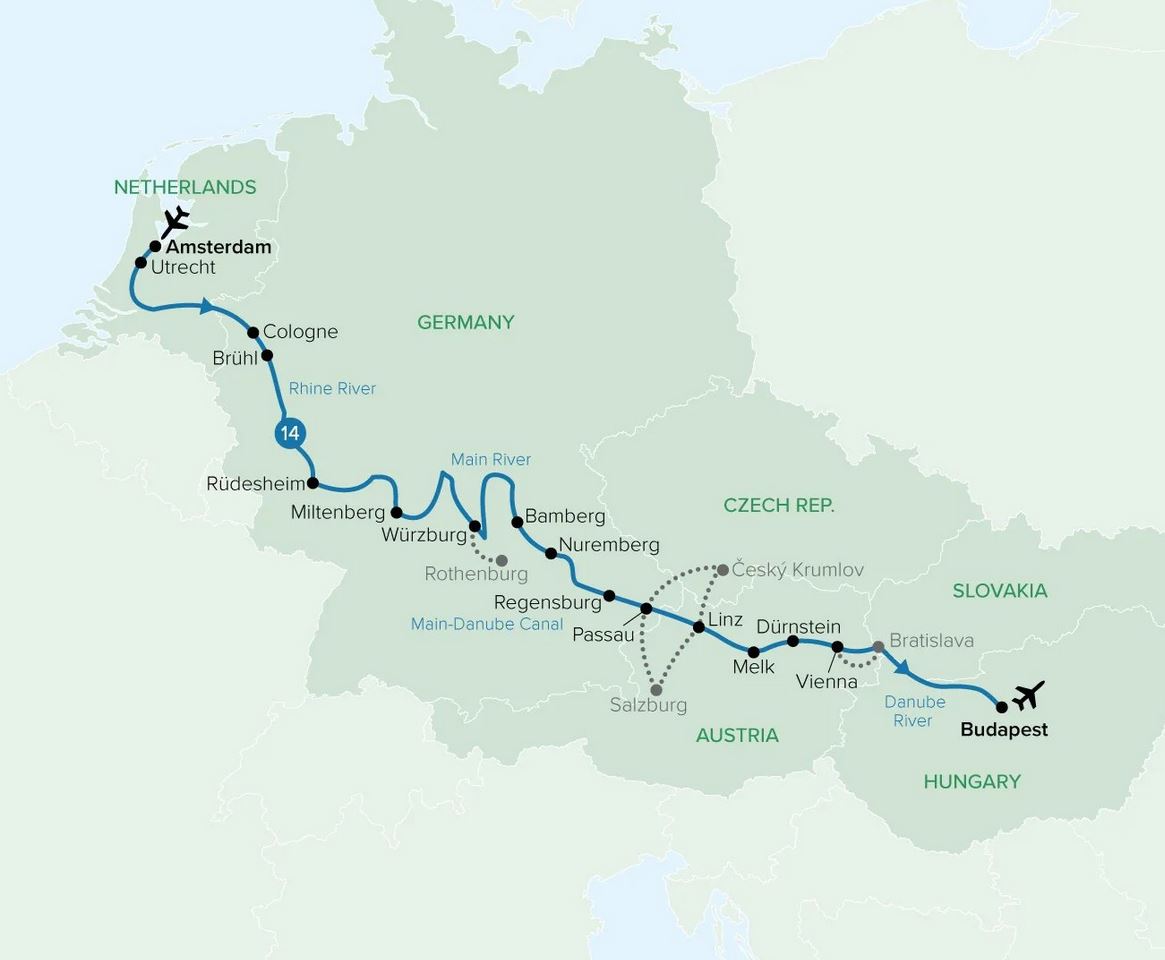

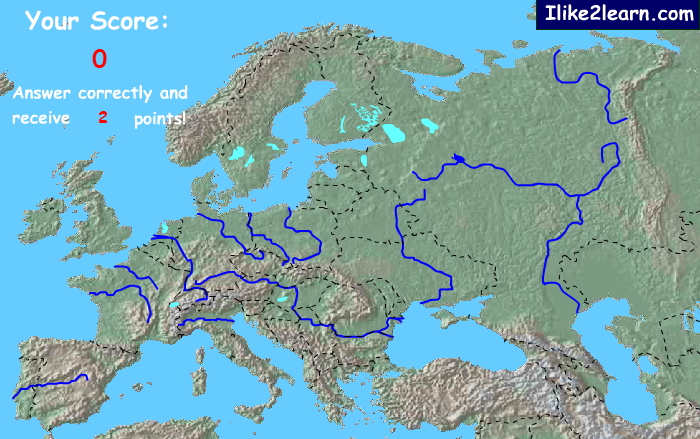

European River Cruises 2024 2026 Seasons 110346 . Europe Rivers Map Major Waterways Traced Europe Rivers Map Worksheet . European Rivers Rivers Of Europe Ilike2learn Interactive Maps 83271ca9 Aab3 52cc 8a9e . Map Of All Rivers In Europe Free Printable Templates . Eastern European River Cruises 2025 2026 Tauck Rxe2023 Map
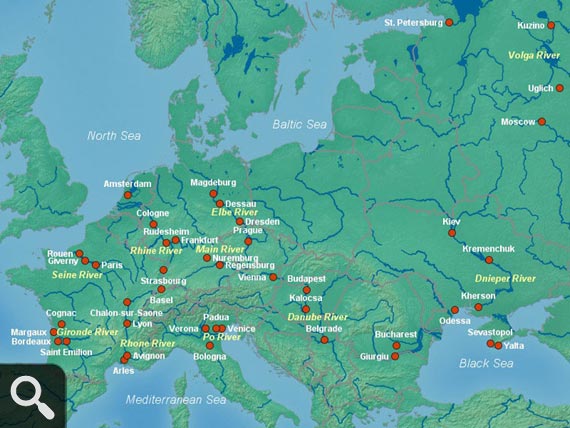


River Cruises Book River Cruises Worldwide For Less Cruise Com Europe Rivers Map Thumb . Grand European Tour 2026 Itinerary Budapest To Amsterdam Viking. Europe Major Rivers Map Rivers In Europe Map . Europe River Cruise Great Rivers Of Europe Map Bratislava Basel . Test Your Geography Knowledge Europe Rivers Level 1 Lizard Point Europe Rivers Lvl1


What Role Did Rivers Play In Europe S Growth At Gabriella Raiwala Blog B . Great Escapes New Year Sale Europe Cruises Emerald Cruises Er Erc 2026 Brochure Cover 372x528 . Map Of Europe Rivers HZefmgG . 2026 Castles Of The Rhine River Cruise Brand G Vacations Rhine 2022 2 . Map Of All Rivers In Europe Free Printable Templates Europe Map Rivers


Map Rivers With Sf And Ggplot2 In R Milos Popovic Personal Website Photo1 . Seasonal River Cruises Europe 2025 2026 Holidays Scenic Snem2906 Erc 2026 Cover 372x528 . Rhine River Map Europe ESSD A New Dataset Of River Flood Hazard Maps Rhine River Map . Europe Physical Map Rivers Diagram Quizlet B . In River Cruises Throughout Europe Eastern Europe European Rivers Map AMA